

Making robots less scary
When robots enter our living environment it is very important to manage expectations.
Humanoid robots need to communicate with us.
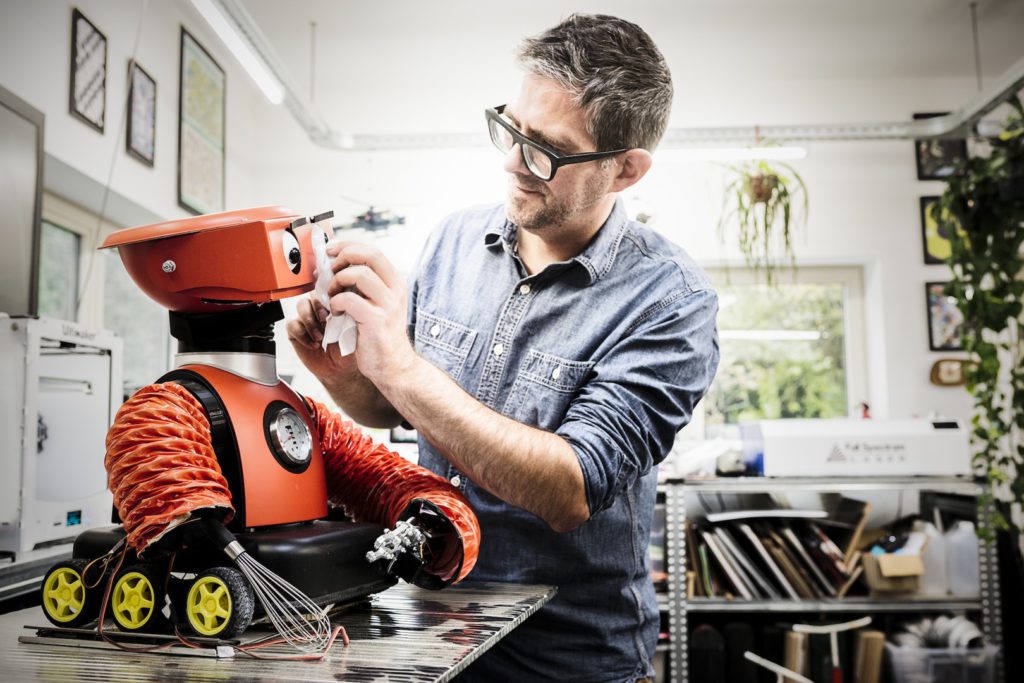
With 28 years of experience, 15 of them spent designing and building humanoid robots, I’ve been working in embodied AI long before it had that name.
Available for pay-roll, in-house roles, long-term engagements, as well as freelance projects.
Take a look at my work:
What I do
Embodied AI Design
As AI moves from screens into physical environments, robots need to communicate naturally and intuitively. I design expressive robotic interactions for real-world human environments.
Humanoid Robot Customisation
Adapting robotic platforms for industrial environments, exhibitions, hospitality, education, retail and public interaction.
Human-Robot Interaction
Exploring trust, social behavior, movement, communication and expressive interaction. Robots need to communicate their intentions clearly and intuitively. Without trust, people won’t engage.
Prototyping & Experimental R&D
Rapid development of robot concepts, behaviors and interactive experiences. Exploring the future of embodied AI through hands-on experimentation and real-world interaction.

Why Embodiment Matters
AI isn’t truly everywhere yet, because it still lacks physical presence in the real world.
If humans want to interact naturally with AI, it needs social context, communication and body language.
Trust, comfort and empathy do not emerge automatically. They need to be designed.
Robots can only develop emotional intelligence by interacting with humans in physical environments.
Featured Projects
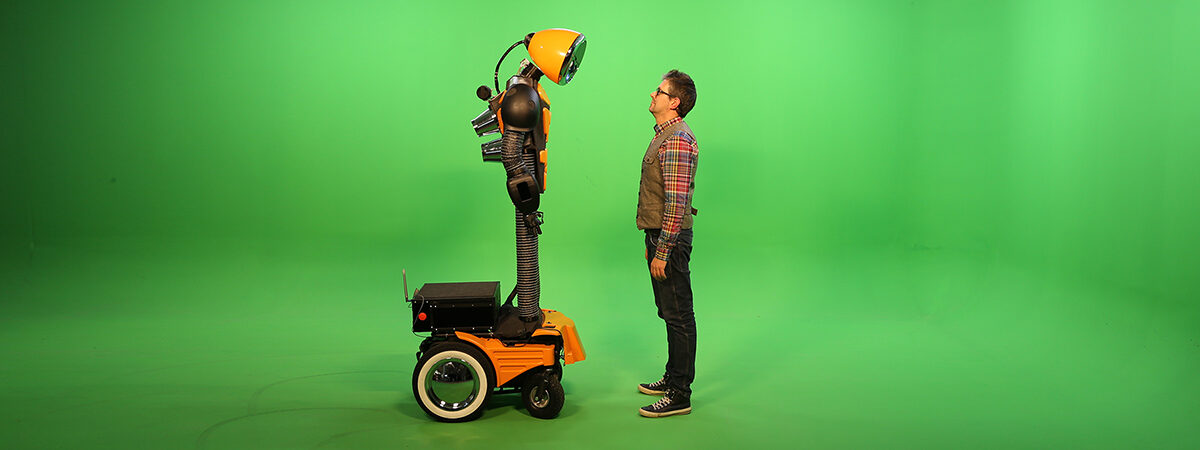

Public Interaction
Changing people’s behavior with city of Ghent
Making a small problem visible and actionable

Experimental Interfaces
Making collaboration with robots intuitive with AUDI Brussels
Turning industrial technology into human interaction

Speculative Concepts
Making human-robot interaction empathic with Vitra
Turning complex robotics into something people can relate to

Embodied AI Experiments
Exploring how humans perceive, interpret and emotionally respond to humanoid robots through hands-on experimentation, behavioral studies and real-world interaction tests.
How close can a robot stand before discomfort?
How does voice tone affect trust?
Does slower movement feel safer?
How expressive should eye movement be?
Mechanical vs soft appearance
Social timing experiments
Robots in Human Environments
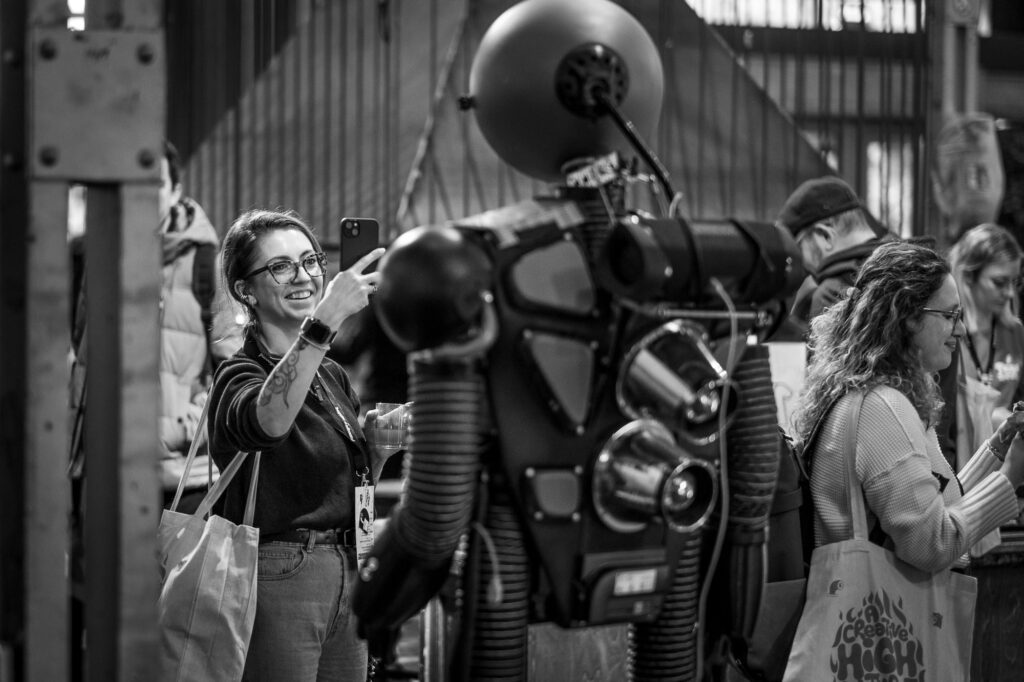
Exploring humanoid robot interaction across museums, exhibitions, theatre, events, hospitality, retail, education and healthcare environments.
When robots enter public space, communication becomes as important as technology itself. Trust depends on expectation management, emotional readability, behavioral choreography and approachable design.

My background
I come from a multidisciplinary background combining storytelling, interaction design, physical computing and robotics. For nearly three decades, I’ve explored how technology shapes human emotion, communication and social interaction.
This includes both humanoid robotics and work in mental healthcare innovation, where communication, trust and emotional accessibility were central themes.
Over the past 15 years, my work has increasingly focused on embodied AI, human–robot interaction and the role of humanoid robots in public and shared environments.
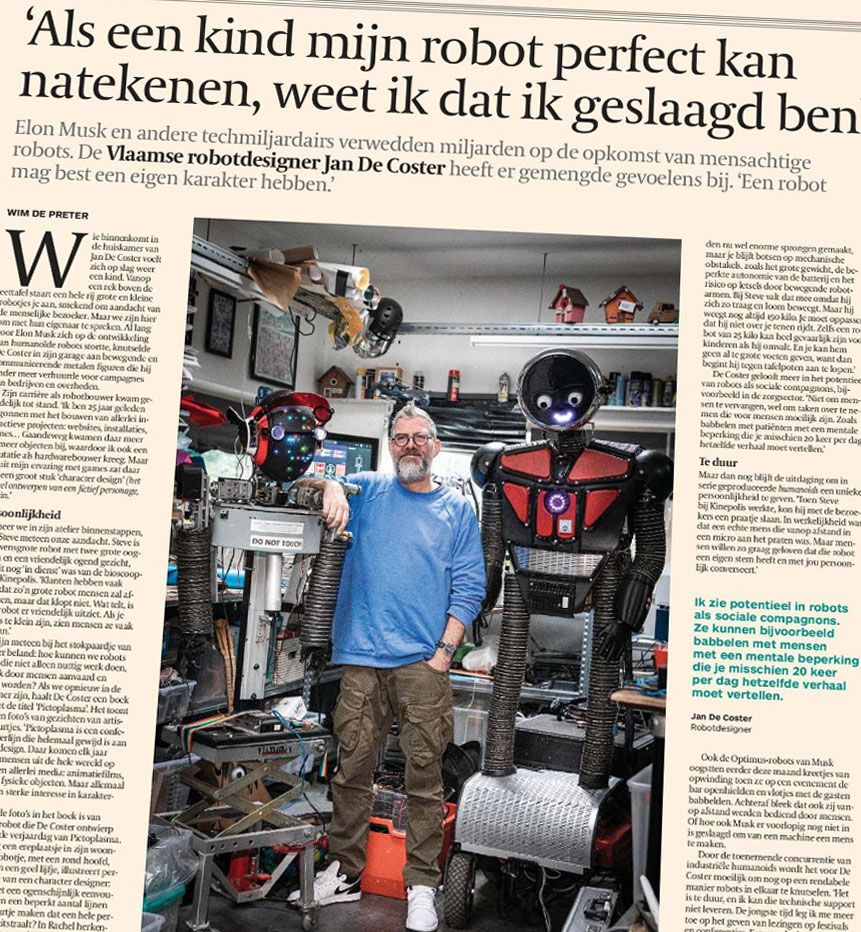
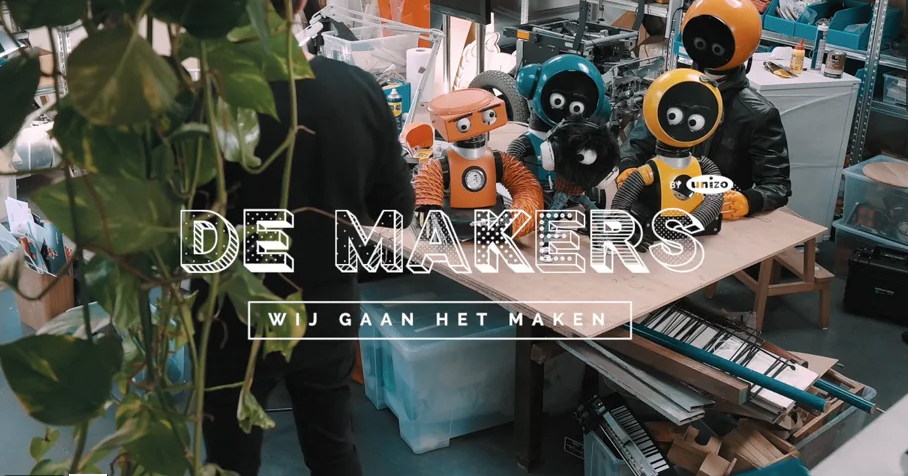
Talks & Interviews


I am open to collaboration with
- robotics companies
- museums
- experience designers
- theatre makers
- innovation labs
- research institutes
- public installations
- startups
- educational institutions
- …
I worked with teams at


Interested in
Embodied AI and
Humanoid Robot Design?
Available for in-house roles and freelance projects.